Bit Philology

Logo di Bit Philology: il nome del progetto in carattere pixelato a spaziatura fissa, compreso tra due matrici di asterischi che passano dal grigio chiaro ai bordi al nero pieno al centro, come in una retinatura. Le matrici di asterischi formano la sagoma di un floppy disk

About Bit Philology

Today, much literature is created digitally. Literary archives, which preserve the manuscripts of writers, increasingly include digital documents and supports (known as born-digital), such as floppy disks, computers and hard drives. The Bit Philology project will propose innovative solutions for describing, editing and analysing digital literary archives, thereby meeting the scientific and societal needs of our digital age.
BitPhilology logo: the word "BitPhilology" in a black pixelated monospaced typeface, centered between two stacks of horizontal black lines. The lines swell and taper like lens shapes, forming a roughly circular disc in the upper and lower halves. The top-left corner of the overall outline is cut diagonally, giving the shape of a floppy disk.
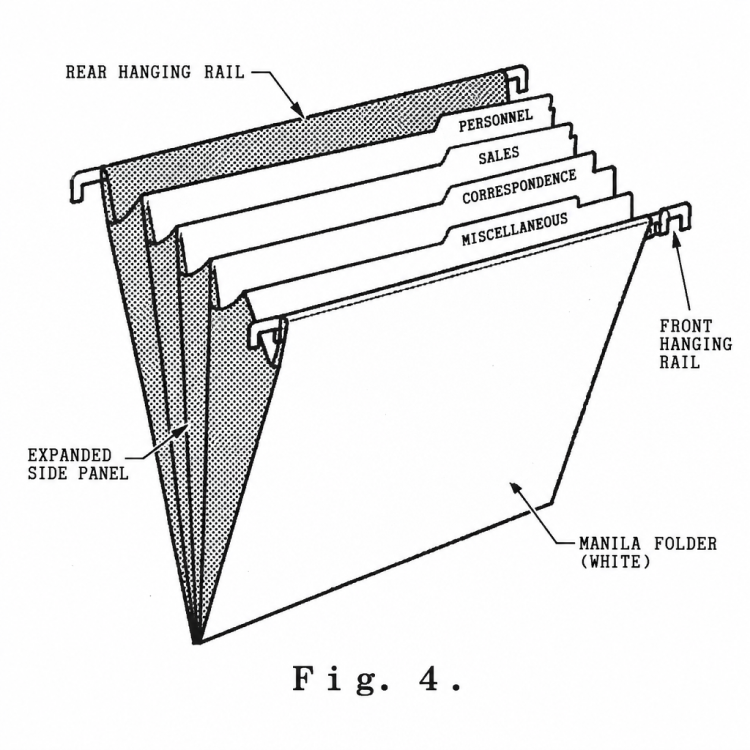
Black-and-white technical illustration of an open hanging file folder seen from an angle. Inside the folder, a row of manila folders stands upright, each with a tab carrying a category number such as "80.26" and a name such as "Resistors, Parts List" or "Deposited Carbon, Test Specs". Arrows and labels point to the hanging folder, the manila folders, the tabs and the category numbers. A note at the bottom right explains how the tabs are written. The caption below reads "Fig. 4. Records Storage and Arrangement".
Diagram of the magnetic field lines of a bar magnet, drawn in grey on a white background. The lines loop out of the top of the central dot, curve around to both sides and return at the bottom, forming nested closed loops that are densest near the centre. Arrows show the direction of the field, pointing upward through the centre and downward around the outside.
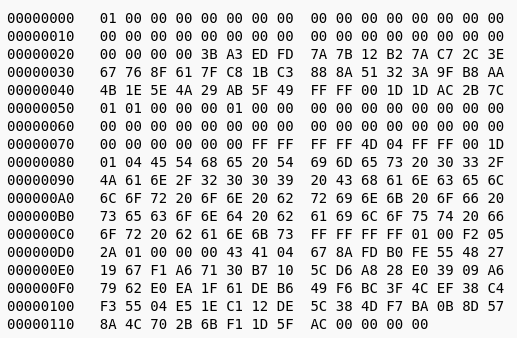
Image from an hexadecimal editor.
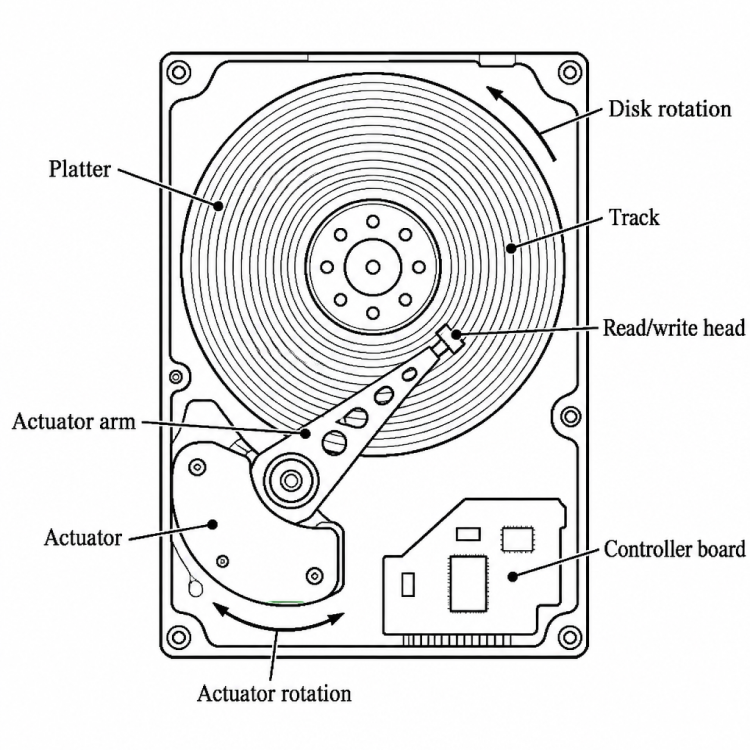
Black-and-white line drawing of a hard disk seen from above. A large circular platter is covered in thin concentric rings, with a small central hub held by six screws. A long arm on the left, labelled "Suspension Arm", reaches from a round "Rotary Actuator" toward the platter, where its tip, labelled "Slider", touches the surface.

Stay in touch

To receive news and updates on the Bit Philology project, join our mailing list: write a message with subject "Subscribe" to bitphilology.dh-request@lists.unibe.ch

Zenodo Community

All publications in the Zenodo Community of the Bit Philology project can be found at https://zenodo.org/communities/bitphilology/.

Team

The team working on the research project is composed by experts in Digital Humanities, Textual Scholarship, Literary Studies, Born-Digital Archives, Information Visualization, and Digital Design.

Bit Philology is a SNSF Starting Grant project running from 2025 to 2030. It is conducted at the Digital Humanities Center, part of the Walter Benjamin Kolleg at the University of Bern.

Credits
Digital Humanities, University of Bern
Walter Benjamin Kolleg, University of Bern
Swiss National Science Foundation